
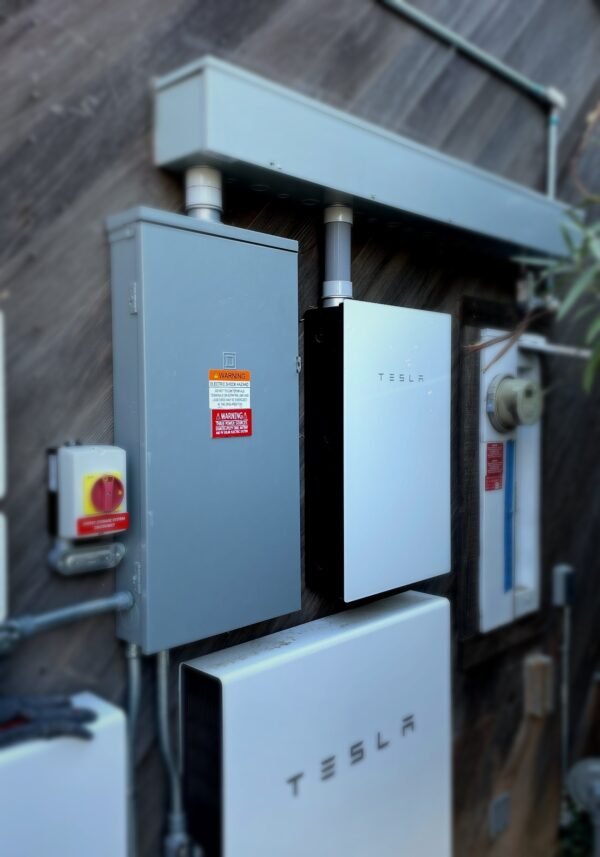
A Tesla Powerwall can be a great feature to inherit with a home. It can also be one more system you know very little about until after the keys change hands.
If you’re buying a house with a Tesla Powerwall in Sacramento, there are a few things worth checking before closing. The goal isn’t just to confirm that a battery is hanging on the wall. You want to know what equipment is actually installed, whether it works properly, what it backs up, and whether you’ll be able to take control of it after the sale.
1. Find Out Exactly Which Tesla Powerwall System You’re Buying
Start with the basics. Determine which Powerwall model is installed, how many batteries there are, and what other Tesla equipment is part of the system.
Depending on the age and configuration, you may see equipment such as:
- Powerwall 2
- Powerwall+
- Powerwall 3
- Tesla Backup Gateway
- Tesla Gateway 3
- Tesla Backup Switch
Don’t assume the listing description is accurate. “Tesla battery” doesn’t tell you much about the actual configuration.
Tesla maintains specifications, owner’s manuals and warranty information for the different Powerwall generations on its Powerwall Owner Documents page.
2. Confirm Whether the Powerwall Actually Provides Backup Power
A Powerwall installation does not necessarily mean the entire house is backed up during an outage.
Some systems provide whole-home backup. Others only supply a dedicated backup loads panel containing selected circuits. Certain configurations may not provide backup capability at all.
Before closing, determine what the system is supposed to power when the utility goes down.
If possible, the system should also be tested in backup mode. Seeing a charged battery in the Tesla app is not the same thing as confirming that the home actually transfers to battery power correctly during a grid outage.
3. Look at the Tesla App and Historical Energy Data
The current homeowner should be able to show you the Tesla app while they still have access to the system.
Look at the Power Flow screen and confirm that the displayed solar production, home consumption, grid power and battery power make sense.
It is also worth reviewing historical energy data. A system that appears normal during a five-minute walkthrough may have recurring faults, periods with no production, communication problems or a battery that rarely operates as expected.
For homes with both solar and battery storage, this is particularly useful because problems with metering or system configuration can make the information displayed in the app misleading.
4. Make Sure Powerwall Ownership Can Be Transferred
This one gets overlooked surprisingly often.
The seller having Powerwall access does not automatically mean the buyer will immediately have access after closing.
Tesla has a specific Powerwall ownership transfer process. For a standalone Powerwall or a Powerwall installed with third-party solar, Tesla currently instructs the new homeowner to contact support after the transaction is complete and provide documentation of the property transfer along with identifying information from the installed equipment.
If Tesla solar is also installed, the process can vary depending on whether the solar system was purchased, financed, leased or installed under another agreement.
That brings up another important question: who actually owns the equipment?
5. Review Solar, Battery and Financing Agreements
If you’re buying a home with solar and a Powerwall, get copies of the original installation and financing documents before closing.
Ideally, you should know:
- Who owns the solar system and battery
- Whether there is an outstanding loan, lease or power purchase agreement
- What equipment was originally contracted
- When the equipment was installed
- Which warranties may still apply
- Who performed the installation
This becomes especially important with older systems or systems installed by a contractor that is no longer in business.
6. Verify the Solar System Too
A Powerwall is only one part of the equation.
If the house has rooftop solar, the solar system should be evaluated along with the battery. A properly operating Powerwall can’t make up for failed solar equipment, missing modules, inverter problems or poor system performance.
For Sacramento-area home purchases, a dedicated solar and battery system inspection can look beyond the normal scope of a general home inspection and evaluate the equipment as an operating system.
That can include comparing installed equipment with available documentation, reviewing production history, checking system communications and looking for installation or configuration problems that may not be obvious during a standard home inspection.
7. Check the Installation, Not Just the Equipment
Tesla makes good equipment. That doesn’t mean every Powerwall installation is equally good.
Look at the overall workmanship and electrical installation around the battery, gateway, disconnects, distribution equipment and solar equipment.
Things like labeling, conductor terminations, equipment condition, breaker configuration, communications and system metering all matter.
Also ask for permits and final inspection records when available. If something about the system doesn’t match the paperwork or the equipment installed at the house, that’s worth sorting out before the transaction is complete.
Buying a House With a Tesla Powerwall in Sacramento
For buyers in Sacramento, Roseville, Folsom, Elk Grove and surrounding areas, solar and battery systems are becoming a normal part of real estate transactions.
The important thing is not to treat the Powerwall like an appliance that either turns on or doesn’t. It’s part of a larger electrical and energy system that includes the home’s solar, utility connection, metering, backup configuration and monitoring.
Before closing, make sure you know what you’re buying, that the equipment is operating correctly, and that you’ll be able to take ownership and control of the system once the home is yours.
Leave a Reply