Does a Home Inspection Include a Solar System Inspection?
If you’re buying a house with solar, it’s reasonable to assume the home inspector is going to inspect it. After all, the system is attached to the house, tied into the electrical service, and may represent tens of thousands of dollars worth of equipment.
But in many cases, a standard home inspection does not include a true solar system inspection.
A home inspector may note that solar panels are present, look for obvious visible damage, or identify something that appears unusual around the electrical equipment. That can be useful. It is not the same thing as determining whether the solar system is complete, properly installed, communicating correctly, and actually producing what it should.
What Does a Home Inspector Typically Look at?
A general home inspection covers a huge amount of territory. The inspector may be evaluating the roof, foundation, plumbing, HVAC, electrical system, attic, appliances, exterior, and dozens of other components during a single visit.
Solar is a specialty system layered on top of several of those areas.
According to the InterNACHI Standards of Practice, a standard home inspection is primarily a visual examination of readily accessible components and is not intended to be technically exhaustive. InterNACHI’s own photovoltaic inspection guidance also notes that PV arrays are excluded from its standard residential inspection scope.
Individual inspectors can certainly go beyond those minimum standards, and some have additional solar training. The important question isn’t simply whether the inspector looked at the solar panels. It’s what was actually evaluated.
Looking at Solar Panels Isn’t a Solar System Inspection
This distinction matters.
A row of modules can look perfectly normal from the ground while the system has significant problems that aren’t visually obvious.
For example, a basic visual inspection may not tell you whether:
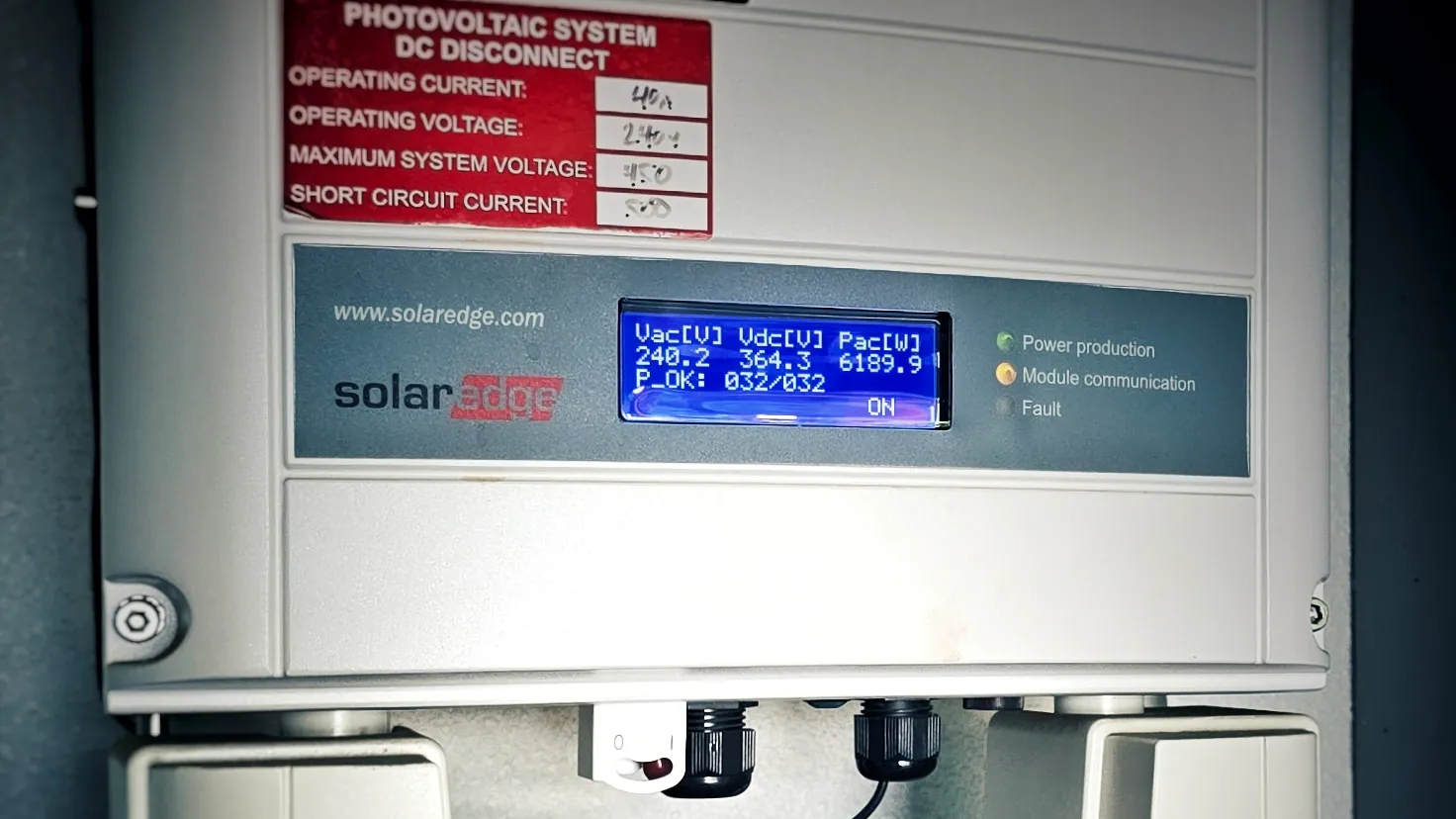
- Every installed module or microinverter is actually reporting.
- The inverter is producing normally.
- One or more optimizers or microinverters have failed.
- The system has been offline for months.
- Production is significantly below what would be expected.
- Current transformers or monitoring equipment are configured incorrectly.
- The equipment installed at the property matches the system documentation.
- A battery system is operating and communicating properly.
- Electrical workmanship problems exist inside accessible solar equipment.
I’ve encountered solar problems that would be very easy to miss during an otherwise thorough home inspection because identifying them requires access to monitoring data, knowledge of the equipment, electrical testing, or a closer look at the solar-specific installation.
What Should a Solar System Inspection Include?
A proper solar inspection should go considerably further than confirming that panels are installed on the roof.
The exact scope depends on the equipment and the property, but for a typical Sacramento-area residential system I want to understand both the physical installation and how the system is actually operating.
That can include checking:
- PV module quantity and system size.
- Inverter, microinverter, or optimizer configuration.
- Solar electrical equipment and accessible terminations.
- Disconnects, breakers, conduit, labeling, and associated equipment.
- System monitoring and communication status.
- Module-level reporting when the equipment supports it.
- Current solar production.
- Historical production when records are available.
- Battery operation and configuration when applicable.
- Visible installation or workmanship deficiencies.
Depending on the system, production data can be especially valuable. A system may be turned on and producing power during the inspection but still have an underperforming string, a missing module, a failed optimizer, or another issue that has reduced output for months or years.
Why Solar Gets Missed During Sacramento Real Estate Transactions
Solar is now common enough around Sacramento, Roseville, Elk Grove, Folsom, Citrus Heights, and the surrounding region that buyers regularly encounter homes with existing PV and battery systems.
But solar systems vary considerably.
A home might have an older string inverter, SolarEdge optimizers, Enphase microinverters, a Tesla Powerwall, or equipment from an installer that is no longer in business. Monitoring credentials may be missing. Equipment may have been replaced. The current homeowner may know very little about how the system works.
That makes it difficult to judge the condition of the system based solely on appearance.
This is also why I don’t think a home inspector should be faulted simply for recommending further evaluation. A good inspector knows the limits of the inspection they’re performing. Solar troubleshooting and performance analysis require a different set of skills than a general home inspection.
A System Can Be “Working” and Still Have Problems
One of the biggest misconceptions with residential solar is that the system is either working or it isn’t.
There is a large middle ground.
A 24-panel system with two failed modules is still producing electricity. An inverter with one underperforming string is still producing electricity. A monitoring configuration error can show numbers that look plausible while being completely wrong.
None of those systems are completely dead, so the homeowner may have no obvious reason to suspect a problem.
For a home buyer, that matters because you’re not just buying the panels. You’re inheriting the existing equipment, its condition, its production history, its monitoring setup, and potentially whatever problems were left behind by the original installer.
When Should a Buyer Get a Dedicated Solar Inspection?
I think a dedicated solar system inspection in Sacramento makes the most sense when the solar installation represents something you would want to understand before closing.
That is especially true when the system includes a battery, the equipment is several years old, the installer is no longer around, monitoring access is unavailable, production history is questionable, or the seller can’t answer basic questions about the system.
It can also be worthwhile when everything appears to be functioning normally. Establishing the condition and performance of the system before buying the property gives you a baseline rather than discovering an existing problem after closing.
A specialized inspection doesn’t replace the home inspection. The two serve different purposes.
The home inspector evaluates the house as a whole. A dedicated solar and battery system inspection takes a much closer look at the equipment that is actually generating, storing, monitoring, and distributing power at the property.
Ask What’s Actually Included Before the Inspection
If you’re buying a Sacramento-area home with solar, don’t assume the solar system is covered just because you’re paying for a home inspection.
Ask the inspector directly.
Do they inspect the PV system? Do they access the inverter or monitoring platform? Do they evaluate production? Do they verify module-level operation when available? Do they inspect battery equipment? Will the solar system receive its own findings in the report?
The answers will tell you very quickly how much of the system is actually being evaluated.
A home inspector may identify an obvious solar problem, and some inspectors have considerably more solar experience than others. But if you want to know whether the system you’re about to inherit is complete, operational, and performing normally, that generally requires a solar system inspection rather than a quick look at the panels during the home inspection.
Leave a Reply