
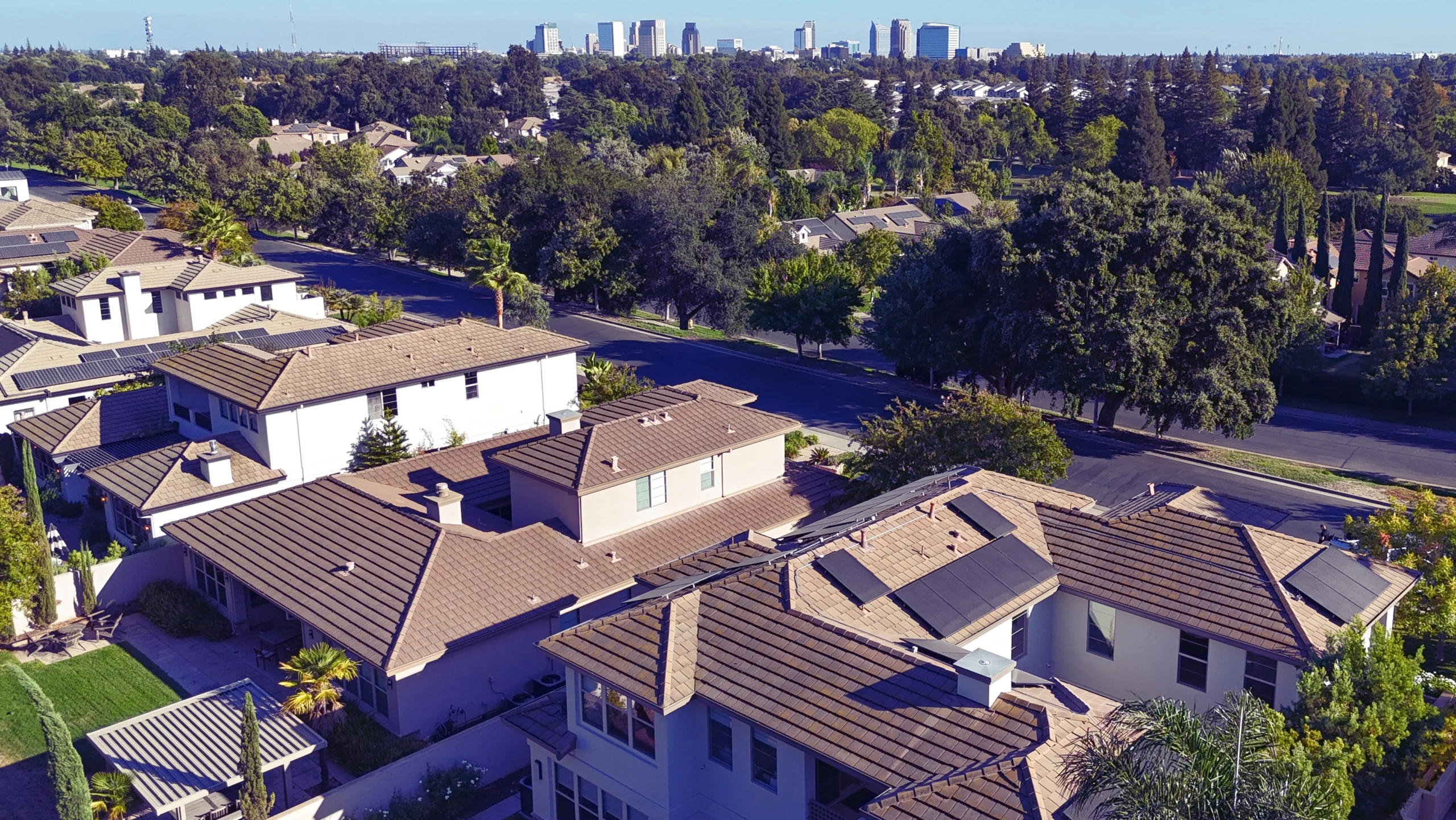
Adding a few more solar panels might seem like a straightforward way to increase production. Maybe you’ve purchased an electric vehicle, added a battery, or noticed that your electricity consumption has gradually outgrown your original system.
But expanding an existing solar system isn’t necessarily as simple as connecting a few additional panels. Inverter capacity, electrical configuration, battery compatibility, permitting requirements, and utility agreements all come into play.
For homeowners in Sacramento and surrounding communities, there’s another important consideration: adding solar panels could affect your existing Net Energy Metering (NEM) agreement.
Can You Add Solar Panels to an Existing System?
In many cases, yes. Whether it’s practical depends largely on how the original system was designed and how much unused capacity is available.
There are two basic approaches:
- Expand the existing array: Connect additional modules to an existing inverter, provided its electrical specifications and available inputs support the expansion.
- Install a separate solar array: Add panels with their own inverter or microinverters, operating alongside the existing equipment.
Neither option is universally better. The appropriate approach depends on the installed equipment, system architecture, and the amount of additional generation needed.
Does Your Existing Inverter Have Enough Capacity?
The inverter is usually the first place to look when evaluating a solar expansion.
Solar inverters have specific limitations on DC input voltage, input current, maximum connected PV capacity, and AC output power. Adding panels without accounting for these limitations can result in reduced production, equipment faults, or an installation that doesn’t meet manufacturer specifications.
String Inverters and MPPT Limitations
Systems using string inverters, such as many SolarEdge, SMA, Fronius, and other installations, require careful evaluation of string configurations and inverter inputs.
Important considerations include:
- Maximum allowable PV array capacity
- Available MPPT inputs and their operating voltage ranges
- Maximum input current and short-circuit current ratings
- Module and optimizer compatibility, where applicable
- Existing string lengths, orientation, and electrical characteristics
For example, an inverter with unused PV capacity might accommodate additional modules without replacement. However, that doesn’t necessarily mean those modules can be connected to an existing string.
Mixing panels with different electrical characteristics or combining strings with incompatible operating conditions can reduce performance and, in some configurations, violate equipment specifications.
What About Enphase Microinverter Systems?
Enphase systems can sometimes be more straightforward to expand because each panel has its own microinverter.
However, additional microinverters still need to be compatible with the existing equipment and monitoring system.
AC branch circuit limits, combiner capacity, gateway compatibility, and the home’s electrical service must also be evaluated.
An expansion isn’t automatically compatible just because the original system uses microinverters.
Adding Solar Panels to an Existing Battery System
When battery storage is involved, an expansion requires additional consideration.
Depending on the system, solar production may be connected through a hybrid inverter or through a separate AC-coupled inverter. These arrangements handle solar generation, battery charging, and backup operation differently.
DC-Coupled Solar and Battery Systems
In DC-coupled systems, solar panels and batteries share an inverter architecture. Adding panels requires verifying the inverter’s PV input limitations, battery charging capabilities, and supported system configurations.
Some hybrid inverters have unused MPPT inputs or additional allowable PV capacity. Others may already be operating near their design limits.
AC-Coupled Solar and Battery Systems
With AC coupling, additional solar generation may be possible using a separate inverter.
However, the battery system must be able to accommodate the additional generation, particularly during utility outages.
Backup systems must regulate or curtail solar production when batteries are full and household demand is insufficient. Adding an incompatible inverter could interfere with that process.
For systems such as Tesla Powerwall, Enphase IQ Battery, or SolarEdge battery installations, manufacturer-specific compatibility and backup capacity limits should be verified before selecting additional equipment.
Will Additional Panels Charge My Battery Faster?
Possibly, but not necessarily.
Additional panels can provide more energy for battery charging, especially during mornings, afternoons, and less-than-ideal weather conditions.
However, batteries and their associated inverters have maximum charging power limits. Once those limits are reached, additional solar production cannot increase the charging rate.
Battery capacity is also unchanged. A 13.5 kWh battery doesn’t store more energy simply because additional panels have been installed.
For some homeowners, modifying battery operating schedules or correcting an existing metering configuration may offer better results than installing additional modules.
Do You Need a New Permit to Add Solar Panels in Sacramento?
Generally, yes. Adding solar panels to an existing residential installation typically requires a new building/electrical permit or, if the original permit is still active, an approved revision through the local building department.
This applies even when the existing inverter is retained and no new battery equipment is installed.
Depending on the project and jurisdiction, permit documentation may include:
- Updated electrical single-line diagrams
- Revised PV array layout and equipment specifications
- Structural information for additional roof-mounted equipment
- Electrical load and conductor calculations
- Equipment installation and grounding details
Permit requirements vary between the City of Sacramento, unincorporated Sacramento County, and surrounding jurisdictions such as Roseville, Elk Grove, and Folsom.
Sacramento County provides additional information through its building permit and inspection resources.
It’s also important to understand that a building permit and a utility interconnection application are two separate things. Approval from the building department does not automatically authorize a change in the generating capacity approved by your utility.
Will Adding Solar Panels Affect My NEM 1.0 or NEM 2.0 Status?
For PG&E customers, this is one of the most important questions to resolve before expanding an existing solar installation.
Customers grandfathered into NEM 1.0 or NEM 2.0 generally receive more favorable compensation for exported energy than customers enrolled in the newer Solar Billing Plan, commonly called NEM 3.0.
Under PG&E’s legacy NEM rules, an existing system can generally be increased by up to the greater of:
- 10% of the originally approved generating capacity, or
- 1 kW of additional generating capacity
without losing eligibility for the remainder of its original grandfathered period, provided other applicable tariff requirements are satisfied.
For example, a 6 kW system could generally be expanded by 1 kW under this threshold. A 12 kW system could generally be expanded by 1.2 kW.
The threshold is based on the originally interconnected system’s capacity, not necessarily its present-day production or whatever equipment happens to be installed today.
What Happens If You Exceed the NEM Expansion Limit?
A larger expansion can trigger a transition from legacy NEM billing to the newer Solar Billing Plan.
Under PG&E’s rules, certain expansions exceeding the threshold may also be interconnected separately under an eligible non-export arrangement, allowing the original system to retain its NEM status.
That option requires additional engineering and utility approval. It should not be assumed that every existing solar and battery system can accommodate this configuration.
Before proceeding, homeowners should verify the proposed system capacity and interconnection arrangement directly with PG&E.
See PG&E’s Solar Billing Plan information for additional guidance.
Does a New Permit Automatically Cancel Your NEM Agreement?
No. Obtaining a permit does not, by itself, cancel an existing NEM agreement.
The important issue is whether the proposed modifications comply with the utility’s applicable tariff and interconnection requirements.
Even when an expansion falls within the grandfathering limits, an updated interconnection submission may still be required.
Homeowners should have the proposed expansion and its effect on legacy status confirmed before purchasing or installing equipment.
What About SMUD Customers Adding More Solar Panels?
SMUD operates under a different solar compensation structure than PG&E.
Existing SMUD customers with qualifying legacy NEM agreements may generally retain that arrangement through December 31, 2030, subject to applicable conditions.
SMUD also applies expansion limits based on 10% of originally approved generating capacity or 1 kW, whichever is greater.
Expansions exceeding the applicable legacy limits require a new interconnection application and transition to SMUD’s Solar and Storage Rate (SSR).
Unlike PG&E’s legacy NEM structure, SMUD’s SSR compensates exported electricity at a separate export rate.
Consequently, an expansion that increases overall production might not produce the financial benefit a homeowner expects if it also changes the property’s billing arrangement.
SMUD customers can review these requirements through the utility’s residential solar information page.
Is Adding More Solar Panels Actually Worth It?
Before adding panels, I recommend determining whether the existing system is performing as intended.
A system that appears undersized may actually be experiencing reduced production due to an inverter problem, failed microinverters, incorrect system configuration, shading, or another performance issue.
Battery operating modes and incorrectly configured current transformers (CTs) can also affect how effectively solar energy is used or stored.
Additional panels won’t correct those problems.
An expansion evaluation should ideally include:
- Reviewing historical solar production and system performance
- Comparing production against household electrical consumption
- Identifying inverter and battery operating limitations
- Reviewing utility billing and export compensation
- Checking the existing NEM agreement and expansion allowances
- Estimating the expected additional energy production and financial benefit
For homeowners in the Sacramento area, a solar system performance and optimization evaluation can help identify whether additional generation is necessary or whether improvements to the existing installation would be more practical.
Final Thoughts: Evaluate the Existing System Before Expanding
Adding solar panels to an existing solar and battery system is often technically possible. Whether it makes financial sense is another question.
The existing inverter and battery equipment must support the proposed configuration, local permitting requirements must be satisfied, and the utility must approve the appropriate interconnection arrangement.
For customers with grandfathered NEM agreements, protecting that status should be a major consideration in any expansion plan.
My recommendation is to start with a clear understanding of what the existing system is capable of, how it’s currently performing, and how the proposed changes would affect utility billing.
Sometimes additional panels are exactly what’s needed. Other times, the better investment is getting the equipment already on the roof to perform as intended.
Leave a Reply