
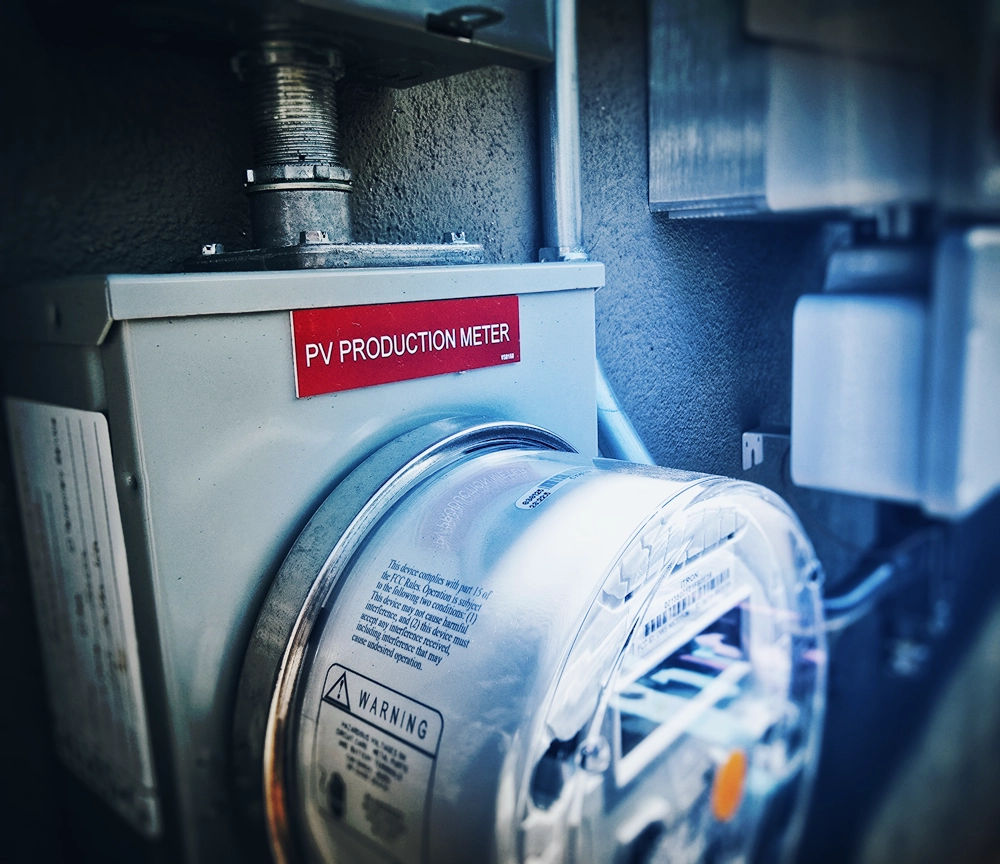
PG&E Solar True-Up Explained: A Sacramento Homeowner’s Guide
A large PG&E true-up bill can be an unpleasant surprise, especially when you were told that solar would eliminate most or all of your electric bill.
The true-up itself is not an extra fee or penalty. It is an annual accounting of the electricity your home pulled from the grid, the excess solar energy it sent back, and the credits or charges that accumulated during the previous 12 months.
However, a high true-up can reveal a real problem. Your household may be using more electricity than expected, your rate plan may not match your usage, or your solar system may not be producing what it should.
What Is a PG&E Solar True-Up?
For many Sacramento-area homeowners with solar, PG&E tracks electricity imports and exports throughout a 12-month billing cycle.
During the day, your solar system may produce more electricity than your home is using. That excess energy is exported to the grid. At night, during poor weather, or whenever your home needs more power than the system is producing, electricity is imported from PG&E.
The annual true-up reconciles the charges and credits associated with that activity.
Your true-up statement may include:
- Electricity imported from the grid
- Solar electricity exported to the grid
- Energy charges and export credits
- Time-of-use rate adjustments
- Non-bypassable charges and other required fees
- Any remaining balance due
- Net surplus compensation, when applicable
PG&E provides additional information on its solar billing and annual true-up page.
NEM 1.0 and NEM 2.0 True-Ups
Most older solar systems in the Sacramento region are enrolled in either Net Energy Metering 1.0 or Net Energy Metering 2.0.
Under these programs, eligible electricity charges and solar credits generally accumulate during the 12-month billing period. Your monthly statement shows an estimated year-to-date balance, but the full amount is reconciled at the end of the true-up cycle.
This can create a false sense of security. A homeowner may pay relatively small monthly bills while a much larger year-to-date balance is quietly building.
The running balance shown on your monthly bill is not just informational. It is your warning of where the account is headed.
How the Solar Billing Plan Is Different
Customers who applied for interconnection on or after April 15, 2023 generally fall under California’s Net Billing Tariff, which PG&E calls the Solar Billing Plan. This is also commonly referred to as NEM 3.0, although that is not its official name.
Under the Solar Billing Plan, customers generally pay their remaining electricity charges monthly. Excess export credits may carry forward, with an annual true-up used to reconcile the accumulated credits and determine whether any net surplus compensation applies.
That means a Solar Billing Plan customer may still receive an annual true-up statement, but it does not function exactly like a traditional NEM 1.0 or NEM 2.0 true-up.
The California Public Utilities Commission provides a useful comparison of the state’s net-metering and net-billing programs.
Why Is My PG&E True-Up So High?
A high true-up does not automatically mean that the solar system is malfunctioning. It means that the value of your annual imports, required charges, and other billed electricity exceeded the credits available to offset them.
There are several common reasons this happens.
Your Household Is Using More Electricity
Changes in household consumption are one of the most common causes of a rising true-up.
Examples include:
- Adding an electric vehicle
- Installing a pool or spa
- Running the air conditioner more often
- Adding occupants to the home
- Working from home
- Replacing gas appliances with electric equipment
- Using portable heaters during winter
A solar system designed around your household’s electricity use five years ago may no longer be large enough for the way the home is used today.
Your Solar System Is Underproducing
Solar production problems are another possibility. A system can remain partially operational while producing substantially less energy than expected.
Possible causes include:
- Failed or disconnected microinverters
- Inverter faults or repeated shutdowns
- Communication failures hiding equipment problems
- Utility voltage conditions causing inverter trips
- New shading from trees or nearby construction
- Heavy soiling or debris
- Incorrect commissioning or system configuration
- A system that was undersized from the beginning
Looking only at a green status light or a monitoring screen that says “normal” is not always enough. The system can be online without producing the amount of energy it should.
Your Rate Plan Does Not Match Your Usage
PG&E solar customers are commonly placed on time-of-use rates. The cost of electricity changes depending on when it is consumed.
Solar production is usually strongest around the middle of the day. Household demand often increases later in the afternoon and evening, when solar output is falling and electricity may be more expensive.
This timing difference can result in a substantial balance even when annual solar production appears reasonably close to annual consumption.
You Are Confusing Solar Production With Grid Exports
Your PG&E bill generally does not show all the electricity produced by your solar system.
Some solar energy is consumed immediately inside the home before it ever reaches the utility meter. PG&E primarily measures electricity flowing between your property and the grid.
For example, your system may produce 30 kilowatt-hours during the day while the home immediately consumes 18 kilowatt-hours. Only the remaining 12 kilowatt-hours would be exported and recorded by PG&E as energy sent to the grid.
This is why the production total in your inverter or monitoring app will not necessarily match the export total on your utility bill.
Required Charges Still Apply
Solar does not necessarily eliminate every charge on a PG&E account.
Depending on your rate and billing program, you may still see minimum charges, non-bypassable charges, taxes, fees, gas charges, and other items that solar credits cannot fully offset.
These charges are not proof that the system is defective.
How to Find Your True-Up Date
Your true-up date is tied to your individual 12-month billing cycle. It is not necessarily based on the calendar year, tax year, or anniversary of purchasing your home.
Look at the solar or net-energy-metering section of your PG&E statement. It should identify your current true-up period, year-to-date balance, and expected true-up month.
If you recently purchased a home with an existing solar system, do not assume the account started with a clean slate. Confirm the billing cycle and true-up date directly on your current statement.
Do Not Wait Until the Annual Bill Arrives
Your monthly PG&E statement should show how the account is tracking toward the annual true-up.
Review the year-to-date balance regularly. If the amount is steadily increasing during months when the system should be producing well, investigate before the end of the billing year.
Waiting until the true-up arrives can allow an equipment failure or billing issue to continue for months.
What Should You Check After Receiving a High True-Up?
Start by gathering information rather than assuming that the utility bill or solar equipment is wrong.
Useful records include:
- The complete PG&E true-up statement
- At least 12 months of PG&E bills
- Monthly solar production totals
- The original solar contract and production estimate
- Monitoring alerts or equipment fault history
- Records of major changes in household electricity use
Then compare three separate numbers:
- How much electricity the solar system actually produced
- How much electricity the household consumed
- When that electricity was imported from or exported to the grid
Those figures answer different questions. Looking at only one of them rarely explains the full bill.
Does a Large True-Up Mean You Need More Solar Panels?
Not necessarily.
Adding panels may help when the existing system is operating correctly but is simply too small for the home’s current electricity consumption.
Additional panels will not solve:
- A failed inverter or microinverter
- Incorrect monitoring data
- A poorly matched rate plan
- Heavy evening electricity use
- Battery settings that are not aligned with the customer’s goals
- Unexpected equipment shutdowns
Before expanding a system, determine whether the existing equipment is functioning correctly and whether the true-up is being driven by production, consumption, rates, or timing.
Would a Battery Reduce the True-Up?
A battery can reduce grid imports during expensive evening hours by storing excess solar energy produced earlier in the day.
That can be particularly valuable under the Solar Billing Plan, where midday exports may be worth considerably less than the electricity purchased later from the grid.
However, a battery is not an automatic fix for every high bill. Its value depends on the customer’s rate plan, load profile, solar production, battery capacity, operating settings, and backup-power goals.
A battery also cannot make up for energy that the solar array never produced.
True-Up Balance Versus Net Surplus Compensation
If your system exported more electricity than your home imported over the full billing year, you may qualify for net surplus compensation.
That does not mean PG&E purchases all excess annual production at the same retail rate you pay for electricity. Remaining annual surplus energy is generally compensated using a separate rate based more closely on wholesale energy value.
For that reason, dramatically oversizing a solar system solely to generate a large annual payout usually does not provide the return homeowners expect.
How a Solar Production and Utility-Bill Review Can Help
A proper review should do more than look at the final amount due.
It should compare the PG&E billing history with the system’s production data, equipment status, expected output, household usage, rate structure, and time-of-use patterns.
This can help determine whether the balance is primarily caused by:
- Increased electricity consumption
- Solar underproduction
- Failed or missing equipment
- Rate-plan effects
- Evening grid consumption
- An undersized system
- A combination of several factors
Learn more about solar system optimization and utility-bill analysis for Sacramento-area homes.
The Bottom Line
A PG&E true-up is an annual reconciliation of electricity charges and solar credits. It is not automatically evidence of a solar-system problem, but it should not be ignored.
When the balance is unexpectedly high, the right question is not simply, “Why didn’t solar cover my bill?”
The better questions are:
- Did the system produce what it should have?
- Did household electricity use increase?
- When was electricity imported from the grid?
- Which billing program and rate plan apply?
- Are the monitoring and utility records consistent?
Once those questions are answered, the true-up usually becomes much easier to explain—and it becomes possible to identify the right solution instead of guessing.
Leave a Reply