Should You Repair a Broken Solar System Before Selling in Sacramento?
You are getting ready to list your home, and there is one problem: the solar system is not working correctly.
Maybe the inverter has failed. Maybe several panels have stopped producing. Maybe the monitoring has been offline for two years and nobody is entirely sure whether the system is working at all.
So, should you repair a broken solar system before selling the house?
In many cases, yes. But I would not recommend automatically authorizing a repair until you know exactly what is wrong. The better first step is usually to have the system properly diagnosed, determine the likely repair cost, and then decide whether repairing it before listing makes financial sense.
A Broken Solar System Can Become a Real Estate Problem
Solar is generally presented as an asset when a home is marketed for sale. A working system can reduce electricity costs and may add value for the right buyer.
A non-working system is different.
Instead of seeing an energy-producing asset, a buyer may see an unknown repair bill attached to the house. Worse, nobody may know whether the problem is a relatively inexpensive communication issue or a failed inverter that requires substantially more work.
That uncertainty is often the bigger problem.
If an inspection discovers the issue during escrow, the buyer may ask for a repair, request a credit, renegotiate the price, or simply become concerned about what else may have been neglected.
Diagnose the Solar System Before You Decide to Repair It
The first question should not be, “How much will it cost to replace the inverter?”
It should be, “What is actually wrong with the system?”
Solar failures are not always what they appear to be. A system showing zero production in an app might have a failed inverter, but it could also have a monitoring or communication problem while the solar itself continues producing.
Likewise, low production could be caused by:
- A failed inverter
- Failed microinverters or power optimizers
- Communication or monitoring problems
- Improper system configuration
- Disconnected or failed strings
- Electrical faults
- Equipment that was never properly commissioned
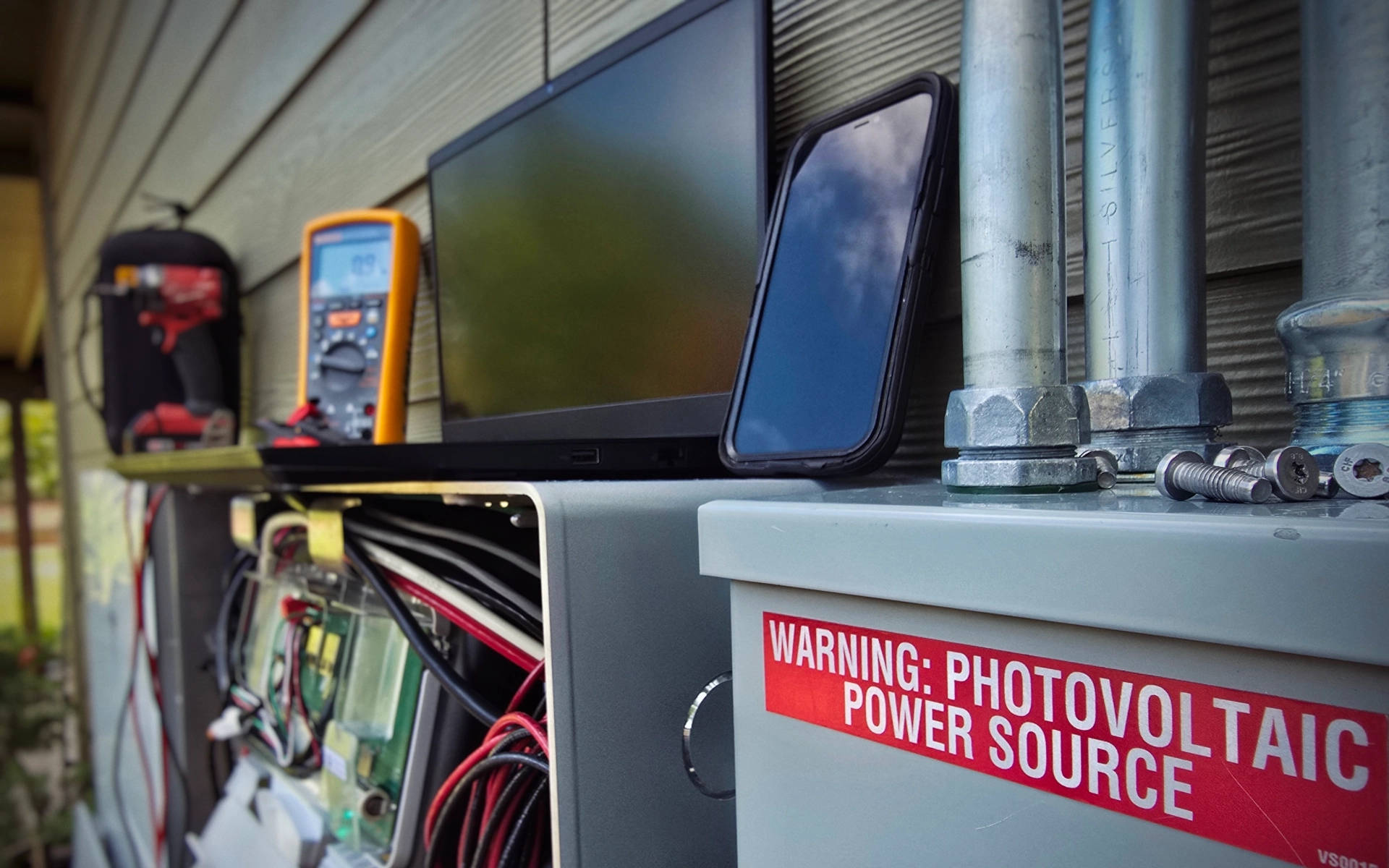
A proper solar diagnostic and repair evaluation can identify the actual failure before money is spent replacing equipment unnecessarily.
When It Usually Makes Sense to Repair a Broken Solar System Before Selling
If the problem is clearly identified and reasonably inexpensive to correct, repairing it before listing is usually the cleaner option.
For example, suppose the system has a failed component that can be replaced for a predictable cost. Completing that repair gives the seller something valuable: a working system with documentation showing what was done.
That is much easier for a buyer to understand than:
“The solar does not work. We think it might need an inverter, but we aren’t sure.”
Repair can make particular sense when:
- The repair cost is relatively small compared with the value of the home.
- The failure has already been definitively diagnosed.
- Replacement equipment is readily available.
- The system is otherwise in good condition.
- The repair restores normal monitoring and production.
- The seller wants to market the solar system as a functioning feature of the property.
When Repairing the Solar System May Not Make Sense
There are also situations where repairing everything before listing may not be the best use of the seller’s money.
An older system may have obsolete equipment, multiple failures, discontinued components, or an original installer that is no longer in business. A repair could turn into a much larger project than expected.
In that situation, knowing the scope of the problem may be more important than actually completing the repair.
For example, an independent diagnostic report might establish that the inverter has failed but the modules, wiring, and remaining system appear serviceable. The seller can then make an informed decision with their real estate agent about repairing it or addressing the known cost during the transaction.
That is very different from leaving the buyer with an unexplained non-producing system.
Solar Ownership Matters Before a Sacramento Home Sale
Before making any repair decision, determine who actually owns the solar equipment.
An owned system is usually straightforward. The homeowner is generally responsible for maintaining and repairing it.
A lease or power purchase agreement can be more complicated because the solar provider may own the equipment and may have its own procedures for service and transferring the agreement to a new homeowner.
The California Public Utilities Commission’s Solar Consumer Protection Guide specifically recommends reviewing what happens to solar loans, leases, PPAs, and other financing arrangements when a home is sold.
Do this early. Finding out during escrow that a solar agreement has transfer requirements, outstanding payments, or service restrictions can create unnecessary delays.
What About Seller Disclosures?
A seller should not assume that an inoperative solar system can simply be ignored because the house is being sold “as-is.”
California residential real estate transactions include required seller disclosures, and California law also recognizes obligations involving facts that materially affect a property’s value or desirability.
Whether a particular solar defect must be disclosed, and exactly how it should be described, is something sellers should discuss with their real estate professional or attorney.
From a practical standpoint, however, if you already know that a major component of the home is not functioning properly, documenting the condition before listing is usually much better than allowing the buyer’s inspector to discover it unexpectedly.
Consider a Solar Inspection Before Listing the Home
A standard home inspection may identify obvious solar-related concerns, but determining whether a system is actually producing correctly often requires more than simply looking at the panels and confirming that the inverter has lights on.
A solar-specific evaluation can review monitoring history, inverter operation, system configuration, electrical components, production data, and other information that helps establish the system’s actual condition.
This can be especially useful with older Sacramento-area systems, orphaned solar installations, or systems where the current homeowner has little information about how the equipment is supposed to operate.
Repair, Credit, or Sell As-Is?
Once the problem has been diagnosed, the decision becomes much simpler.
If the system needs a straightforward $500 repair, addressing it before listing may make considerably more sense than creating an unresolved issue during negotiations.
If restoring a 15-year-old system requires several thousand dollars and discontinued equipment, the seller may reasonably decide to disclose the condition and account for it during the sale instead.
There is no universal answer.
The important part is replacing uncertainty with actual information.
The Bottom Line
For most homeowners wondering whether they should repair a broken solar system before selling, I recommend getting the system diagnosed before making the decision.
Find out what failed, what is still working, what the repair will cost, whether equipment warranties still apply, and whether any solar financing or ownership agreement affects the sale.
Then you and your real estate professional can decide whether repairing the system, offering a credit, or selling it in its current condition makes the most sense.
A known problem with a known solution is usually much easier to deal with than an unknown solar problem discovered halfway through escrow.
Leave a Reply