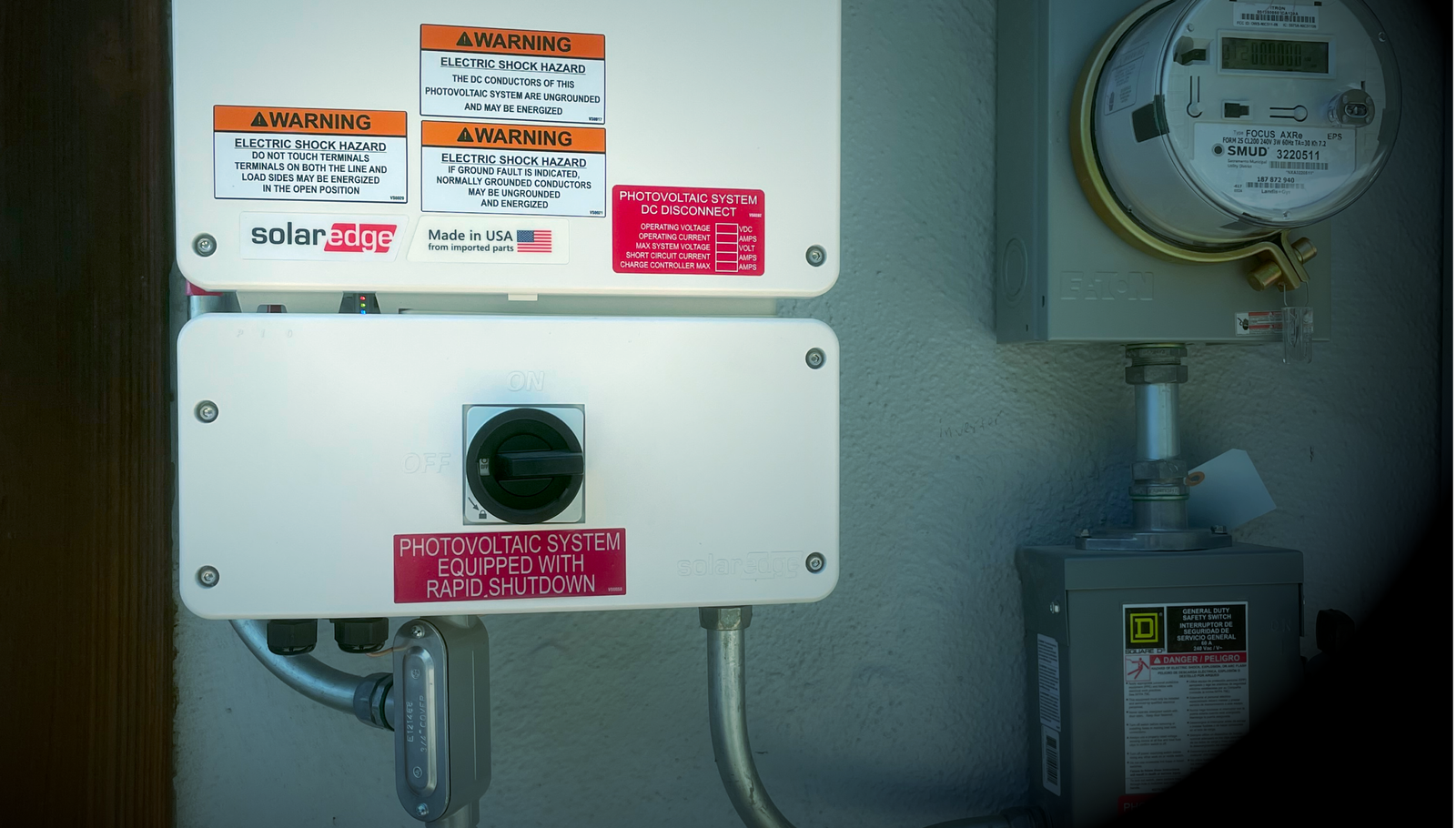
Solar panels may spend 25 years or more on a roof, but the inverter usually has a shorter life. In Sacramento, there is another factor working against it: heat.
An inverter mounted outside can spend summer afternoons operating in ambient temperatures well over 90°F while converting thousands of watts of DC power into AC. Add direct afternoon sun, limited airflow, or a hot garage wall and the electronics inside the inverter are working under some fairly harsh conditions.
So how long should a solar inverter actually last in Sacramento?
What Is the Typical Solar Inverter Lifespan?
For a conventional string inverter, roughly 10 to 15 years is a reasonable general expectation. Some last considerably longer. Others fail earlier.
That means a solar system installed in 2010, 2012, or even 2015 may still have perfectly serviceable panels while its original inverter is approaching—or has already passed—the point where failure becomes more likely.
Microinverters are a little different. They are designed for module-level operation and are commonly sold with much longer warranties, but they are still electronic equipment exposed to years of rooftop temperature cycling.
There is no exact expiration date for any inverter. Installation conditions, equipment design, electrical loading and operating temperature all matter.
Why Sacramento Heat Matters to Solar Inverters
Inverters create heat internally while they operate. On a cool day, their heat sinks and cooling systems can dissipate that heat relatively easily.
On a Sacramento summer afternoon, the surrounding air may already be extremely hot before the inverter even begins trying to cool itself.
High temperatures do not automatically mean an inverter is failing. Modern inverters are designed to operate outdoors and have built-in temperature protection. But repeated exposure to high temperatures and daily heating and cooling cycles places additional stress on electronic components over time.
The U.S. Department of Energy’s PV inverter reliability research specifically identifies thermal cycling as an important stressor when evaluating inverter reliability.
Where the Inverter Is Installed Makes a Difference
I pay particular attention to inverter location when evaluating older solar systems around Sacramento.
An inverter installed on a shaded north or east-facing wall has a very different operating environment than one mounted on a west-facing wall receiving direct afternoon sun.
Conditions that can make heat exposure worse include:
- Direct afternoon sunlight
- Installation against a west- or south-facing wall
- Poor airflow around the inverter
- Obstructions around heat sinks or ventilation openings
- Dust and debris buildup
- Installation inside a poorly ventilated garage or enclosure
The air temperature reported by a weather station is also not necessarily the temperature the inverter is experiencing. Equipment sitting in direct sun against a hot exterior wall can be exposed to considerably more heat.
Can an Inverter Get Too Hot and Reduce Solar Production?
Yes.
Many inverters use thermal derating to protect themselves. If internal temperatures become too high, the inverter may intentionally reduce its output instead of continuing to operate at full power.
That does not necessarily mean the inverter is defective. Derating is a protective function.
But frequent temperature-related power reduction can be worth investigating, especially if the system previously produced normally under similar conditions.
Signs an Older Solar Inverter May Be Failing
Inverter problems are not always obvious. A system can occasionally reconnect and continue producing enough energy that the homeowner does not immediately realize there is a problem.
Common symptoms include:
- Repeated inverter shutdowns or restarts
- Fault or error messages
- Production dropping unexpectedly during the day
- Intermittent communication with the monitoring system
- Production that is noticeably lower than previous years
- The inverter remaining offline even during full sunlight
- Unusual fan noise on equipment that uses active cooling
Not every one of these symptoms means the inverter itself has failed. Utility voltage, DC wiring, communication equipment, breakers and other system components can create similar symptoms.
That is why I generally recommend diagnosing the system before assuming the inverter needs replacement.
Should You Replace an Inverter Just Because It Is 10 or 15 Years Old?
No.
An older inverter that is operating normally does not need to be replaced simply because it reached a certain age.
There is usually more value in watching its performance and knowing what normal operation looks like.
If production begins dropping, faults become frequent or the inverter starts shutting down unexpectedly, then it makes sense to determine whether the problem is actually inside the inverter.
For Sacramento homeowners dealing with an inverter fault or unexplained production problem, my solar diagnostics and repair service focuses on identifying the cause before deciding whether equipment needs to be repaired or replaced.
What About Older SolarEdge, SMA, Fronius and Other Inverters?
There are a lot of Sacramento-area solar systems reaching the age where original inverters are beginning to fail.
This is especially relevant for systems installed during the rapid growth of residential solar in the 2010s. Some of the original installers are no longer operating, while others have stopped servicing older equipment.
An inverter failure does not necessarily mean the entire solar system is obsolete.
If the modules, wiring and other equipment are still in good condition, repairing or replacing the inverter may allow the existing system to continue operating for many more years.
How Can You Help a Solar Inverter Last Longer in Sacramento?
There is not much maintenance a homeowner should perform inside an inverter, but the installation environment matters.
- Keep the area around the inverter unobstructed.
- Do not cover the inverter or block required ventilation.
- Keep leaves, dust and debris from accumulating around cooling surfaces.
- Pay attention to repeated temperature or shutdown warnings.
- Review solar production periodically instead of relying only on a green status light.
I would not recommend adding improvised fans, opening the inverter or modifying the manufacturer’s installation without first determining whether there is actually a temperature problem.
So, How Long Should a Solar Inverter Last in Sacramento?
For a traditional string inverter, 10 to 15 years is a useful planning range, not an expiration date.
Some Sacramento solar inverters will fail sooner. Others will operate well beyond that range.
Heat is only one factor, but Sacramento’s long, hot summers make inverter location, ventilation and thermal management more important than they might be in a milder climate.
If an older system begins producing less energy or repeatedly going offline, age alone should not be the diagnosis. The inverter may be failing—but it is worth confirming the actual cause before replacing anything.
Leave a Reply