Solar System Not Producing? 7 Common Causes in Sacramento Homes
There’s nothing quite as frustrating as opening your monitoring app on a sunny Sacramento afternoon only to discover your solar system isn’t producing any power. Whether production suddenly dropped to zero or gradually declined over time, the good news is that many solar failures follow predictable patterns.
As someone who diagnoses residential solar systems throughout the Sacramento region, I’ve seen the same issues come up time and time again. While some problems require professional troubleshooting, understanding the most common causes can help you identify what’s happening before scheduling service.
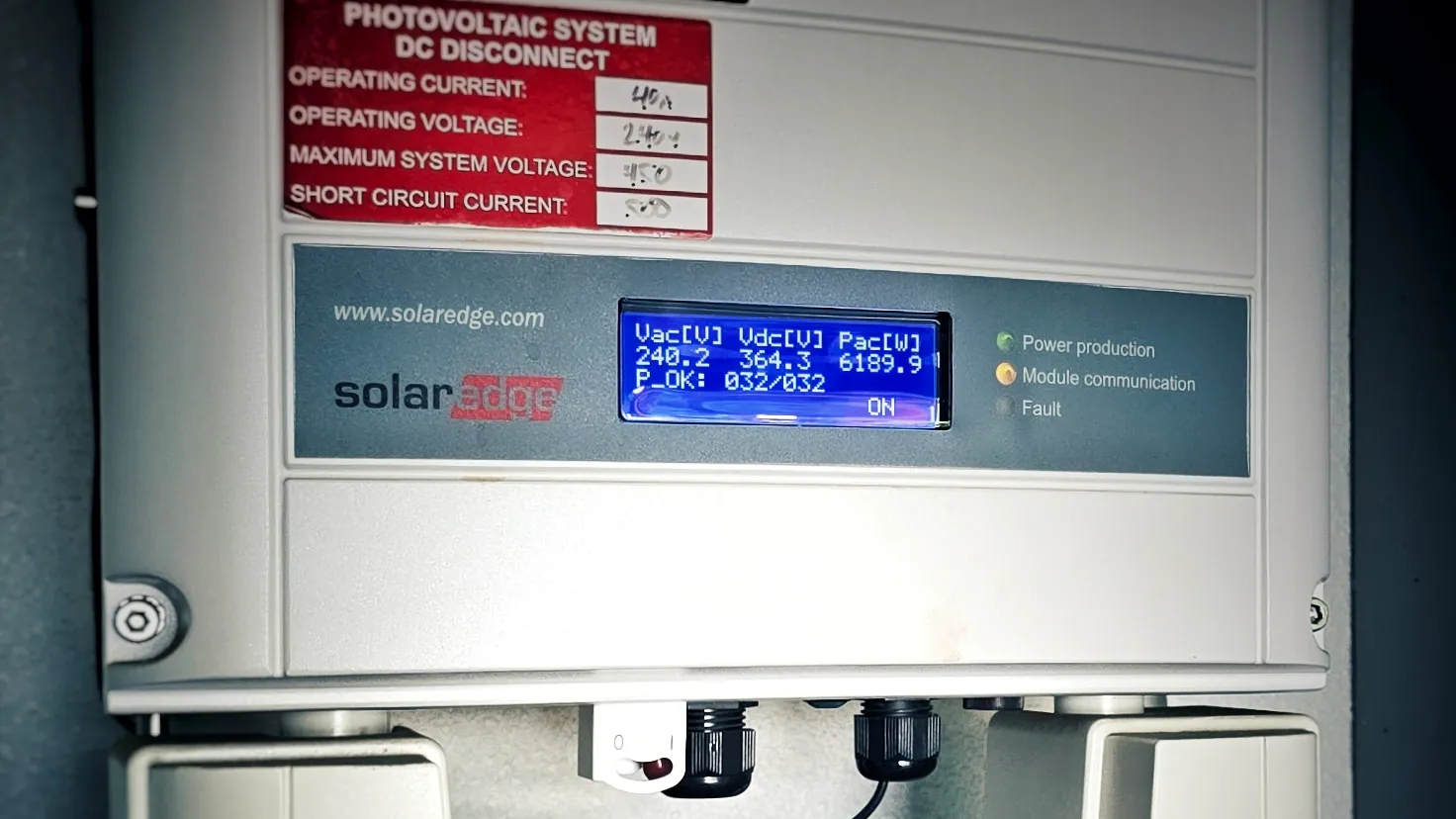
1. Your Inverter Has Shut Down
The inverter is the heart of your solar system. If it stops operating, your panels stop producing usable electricity—even if they’re sitting in full sunlight.
Some common reasons include:
- Grid voltage outside allowable limits
- Internal inverter faults
- Ground faults
- Arc fault detection
- Over-temperature shutdown
- Hardware failure
Many inverters display an error code on the screen or in the monitoring app. While some faults can be reset, others require professional diagnosis to determine the underlying cause.
2. A Utility Power Outage
Many homeowners are surprised to learn that standard grid-tied solar systems automatically shut down whenever utility power is lost.
This is an important safety feature called anti-islanding, which prevents your system from energizing utility lines while crews are making repairs.
Unless your home includes battery backup capable of forming its own microgrid, your solar system will remain offline until utility power is restored.
3. Monitoring Says Zero Production—but the System Is Actually Working
Not every “no production” alert means the solar system has failed.
Sometimes the monitoring equipment loses communication while the inverter continues producing power normally.
Common causes include:
- Internet outages
- Wi-Fi changes
- Gateway communication failures
- Monitoring hardware faults
This is one reason I often recommend upgrading older systems with modern monitoring solutions when possible.
4. Failed Optimizers or Microinverters
Modern systems frequently use power optimizers or microinverters beneath each solar panel.
When one of these devices fails, the effects depend on the system design. Sometimes you’ll lose production from a single panel. Other times an entire string may stop producing.
These failures usually require electrical testing rather than simply looking at the panels.
5. Tripped Breakers or Disconnects
Solar equipment includes several protective devices designed to disconnect the system during abnormal operating conditions.
These may include:
- AC breakers
- DC disconnects
- Rapid shutdown equipment
- External disconnect switches
While it can be tempting to simply reset a breaker, it’s important to determine why it tripped in the first place. Repeated trips usually indicate an underlying electrical issue.
6. Dirty Panels…Usually Aren’t the Problem
One of the biggest misconceptions I hear is that dirty panels are responsible for major production losses.
In reality, Sacramento receives enough seasonal rain that light dust typically has only a modest impact on annual energy production.
If your system suddenly goes from producing normally to producing nothing at all, dirty panels are almost certainly not the culprit.
A proper performance evaluation can determine whether you’re dealing with normal environmental losses or an actual equipment problem.
7. Component Failure from Age
Like any electrical equipment, solar components eventually wear out.
Older systems may experience failures involving:
- Inverters
- Optimizers
- Microinverters
- Connectors
- Communication hardware
- Monitoring gateways
Fortunately, many systems can be repaired without replacing the entire installation.
How to Tell Whether Your System Needs Professional Diagnosis
If your production suddenly drops to zero, your inverter displays fault codes, or your electric bill has unexpectedly increased, it’s worth having the system professionally evaluated.
Rather than replacing parts based on guesswork, a systematic diagnostic process can identify the actual failure and often save both time and money.
If you’re located in Sacramento or the surrounding communities, my diagnostic and repair service focuses on identifying the root cause of solar performance problems so you know exactly what’s wrong before moving forward with repairs.
Final Thoughts
Most solar systems are remarkably reliable, but like any electrical system, occasional failures are inevitable. The key is identifying the real cause rather than making assumptions based on monitoring alerts alone.
Whether the issue is an inverter fault, communication problem, failed optimizer, or electrical component, accurate diagnosis is almost always the fastest path back to full production.
For additional information on how residential solar systems operate, the U.S. Department of Energy’s Homeowner’s Guide to Going Solar provides an excellent overview of system operation and maintenance.
Leave a Reply